- 36 Edward Street Perth WA 6000
- For Technical Assistance please contact at helpdesk@knowyourasset.com.au
THE ELECTRICAL COMPLIANCE DILEMA

Bridging the Gap Between Responsibility and Reality
One of the greatest challenges in corporate structures and building management is sharing up-to-date data and information.
During my time in the corporate world, I was part of a relatively small team in a very large organisation looking after 2,000 sites and over 1 million assets.
As a small team in a large-scale operation, we had limited resources to track and monitor electrical compliance testing across that many sites twice a year.
Therefore, when it came to testing the emergency lights, RCDs appliance testing and thermal imaging for each site, we relied on outsourcing the whole process to electrical service providers i.e. electrical companies.
The service providers were responsible for scheduling the six monthly electrical compliance testing, arranging access to the sites, testing, producing test results,
and finally some sort of system to share the test result data.
Here’s where it got tricky. At the time of my tenure, there were several service providers testing across Australia with no standard for sharing the testing data. The best solution at the time was a share folder but this is only as good as the person looking after it.
People can still be slow to upload the reports, leave the organisation, and the individual responsibility can be hard to pin down.
So we’ve established that it is tricky to share testing between the service provider and the small team in the large organisation (not to mention tracking failures, repairs and warranty, but that’s a whole other blog!) But the frustration gets worse due the amount of stakeholders within the organisation that also want access to this testing information.
The reasons could be for insurance, compliance or auditing. But for the most part it will fall under safety A daily safety report is collated across all sites and on any given day there would be an electric shock or electrical incident.
I’m thankful to say most of these were confused with static shocks but they were required to be investigated nonetheless.
With the investigation comes thereal pain. To close off a safety investigation, I needed the latest RCD or Appliance Tagging test results pronto. The first call of action was an email to the relevant service provider followed by a phone call stressing the urgency. How often did I get them pronto? – Nearly never!
Thankfully at that time, there were no major electrical accidents but enough incidents to warrant some serious questions about where the liability sits should a major incident occur. Without going deeply into legislation and regulations, it is fair to say that if an external investigation were to occur, with such a cumbersome process, there would be several tiers in firing line.
If there was proven neglect, the whole system would come under scrutiny from the organisation issuing work orders, the service provider carrying out the testing in the agreed time frame and providing access to the test results. Did the organisation carry out the repairs and failures as required, and did the organisation ensure that the testing was completed for a site which ultimately as the building owner, is their responsibility?
When I think back at the frustration of the process (or lack of process) endured across this many sites and assets, it is not hard to imagine firstly how overwhelming the management of the compliance testing can be but also how much valuable time and money gets wasted in processes that are not fit for purpose.
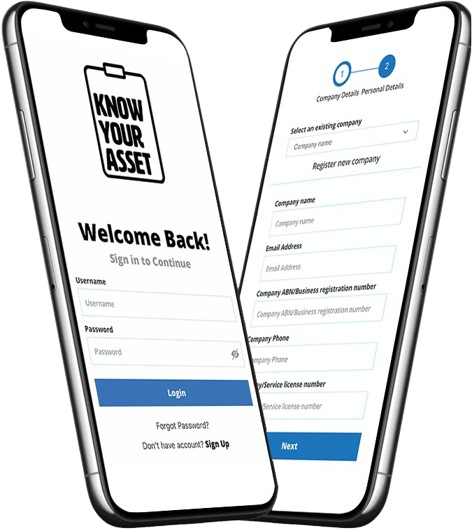
There are some good work management software systems out there that lend themselves to some sort of management of compliance testing. But Know Your Asset is the first built fit-forpurpose software that allows all stakeholders to view test results and reports in real time from anywhere, the very second that the testing electrician has pressed the submit button – well before they’ve even left site!
The Know Your Asset system would have offered very real time and cost savings implications, and equally as important would’ve given all stakeholders (myself included) peace of mind that their legislative duties were being met and tracked, keeping the site staff and customers safe.