- 36 Edward Street Perth WA 6000
- For Technical Assistance please contact at helpdesk@knowyourasset.com.au
Electrical Compliance for Service Providers

Electrical Compliance:
What Electrical Contractors Are Responsible For — and Where the Line Is Drawn
Electrical compliance in commercial buildings often sits in a grey area between what a
service provider does and what a building owner is ultimately responsible for. This is
especially true for emergency lighting, RCD testing, appliance testing and thermal imaging.
For electrical contractors and service providers, understanding where responsibility ends —
and where liability can still arise — is critical.
This article clarifies the role of the service provider, common pitfalls, and how contractors
can protect themselves while delivering compliant outcomes for clients.
The contractor’s role vs the owner’s role
Across Australia, legislation and standards draw a consistent distinction:
• Building owners / PCBUs are ultimately responsible for compliance.
• Service providers are responsible for competently performing the work they are engaged to do, and accurately recording the results.
In other words:
Contractors are not legally responsible for ensuring compliance exists — but they are responsible for the quality, accuracy and integrity of the work and records theyprovide.
This distinction matters.
Responsibilities of the service provider
When engaged to carry out:
- emergency lighting testing,
- RCD testing,
- appliance testing, or
- thermal imaging,
a service provider is responsible for ensuring that:
- Work is carried out in accordance with the applicable Standard
(e.g. AS/NZS 2293.2, AS/NZS 3760, AS/NZS 3000, AS/NZS 3017 or AS/NZS 3012,
where applicable) - Testing methods are correct and appropriate
(e.g. correct discharge testing, correct RCD trip testing, proper appliance inspection) This distinction is particularly important for RCD testing. Portable RCDs are generally tested under AS/NZS 3760, while permanently installed RCDs within
commercial switchboards and electrical installations are typically tested and verified in accordance with AS/NZS 3000 and AS/NZS 3017. Construction-site RCDs may additionally require testing under AS/NZS 3012. - Results are accurate, truthful and complete
- Records and logbooks are updated correctly
- Defects are clearly identified and reported, not concealed or downplayed
What contractors are not responsible for is:
- enforcing testing frequency,
- ensuring the owner engages them at the correct intervals, or
- guaranteeing overall building compliance beyond their scope of engagement.
What happens if a logbook isn’t updated — or is wrong?
This is one of the highest-risk areas for contractors.
Failure to update a logbook
If testing is carried out but:
- the logbook is not updated,
- records are incomplete, or
- results are not handed over,
then from a legal and regulatory perspective:
The test is treated as not having occurred.
This can expose the contractor to:
- breach of contract claims,
- professional negligence allegations, and
- loss of trust with the client.
Inaccurate or false test results
Providing inaccurate test results — whether intentional or careless — is significantly more serious.
This can include:
- recording tests that were not performed,
- recording “pass” where a failure existed,
- copying historical data forward,
- signing off results without proper testing.
Potential consequences include:
- termination of contracts,
- civil liability if an incident occurs,
- loss of licence or accreditation, and
- in extreme cases, criminal investigation.
Even where the building owner retains ultimate responsibility, contractors can still be held liable for misleading or negligent records.
Record keeping: what is the contractor’s responsibility?
While owners must retain records, contractors are responsible for the records they generate.
At a minimum, service providers should:
- complete logbooks accurately at the time of testing,
- retain copies of test results and reports,
- ensure records match the work actually performed, and
- provide results to the client in a usable, timely format.
Relying on handwritten notes, disconnected spreadsheets, or ad hoc PDFs increases risk — especially if records are later questioned.
Common compliance mistakes contractors make
Some of the most common issues seen across emergency lighting, RCDs and appliance testing include:
- Performing testing but not updating the logbook
- Using incorrect or outdated test intervals
- Treating tags as a substitute for records
- Failing to clearly identify and report defects
- Leaving records with head office and not providing access
- Assuming “the client looks after compliance”
- Signing off work outside the agreed scope
Most of these are not technical failures — they are process and record-keeping failures.
Common compliance mistakes contractors make
Some of the most common issues seen across emergency lighting, RCDs and appliance testing include:
- Performing testing but not updating the logbook
- Using incorrect or outdated test intervals
- Treating tags as a substitute for records
- Failing to clearly identify and report defects
- Leaving records with head office and not providing access
- Assuming “the client looks after compliance”
- Signing off work outside the agreed scope
Most of these are not technical failures — they are process and record-keeping failures.
Liability exposure and contractual protection
Contractors are most exposed when:
- scope of work is unclear,
- responsibilities are assumed rather than documented, or
- records are fragmented or inaccessible.
Good contractors protect themselves by:
- clearly defining scope and exclusions,
- documenting what was tested and what was not,
- retaining independent copies of records,
- avoiding compliance guarantees unless explicitly contracted, and
- using systems that timestamp and verify work performed.
The goal is not to shift responsibility — it is to clearly evidence what work was done, when, and by whom.
Doing the work vs ensuring compliance
This distinction cannot be overstated.
- Doing the work means carrying out tests competently and honestly.
- Ensuring compliance means managing systems, schedules, records and governance.
Contractors are engaged to do the former.
Owners and PCBUs are responsible for the latter.
Problems arise when:
- contractors are assumed to “own compliance”, or
- owners assume testing automatically equals compliance.
Clear records and transparent reporting protect both parties.
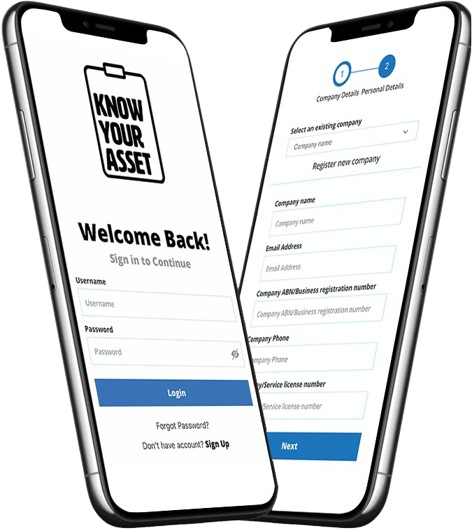
Where Know Your Asset fits
This is where purpose-built systems matter.
Know Your Asset is not about shifting responsibility onto contractors — it’s about removing risk from everyone.
By centralising:
- emergency lighting logbooks,
- RCD test results,
- appliance testing records, and
- thermal imaging reports,
Know Your Asset ensures that:
- records are updated in real time,
- results are immediately accessible,
- data integrity is preserved, and
- contractors can confidently demonstrate the work they have performed.
For service providers, this means:
- fewer disputes,
- clearer scope boundaries,
- reduced administrative burden, and
- a defensible audit trail of work completed.
Final takeaway for service providers
Electrical compliance is shared territory — but accountability for the work performed sits firmly with the service provider.
Contractors who:
- test correctly,
- record accurately, and
- provide transparent, accessible results
not only protect their clients — they protect themselves.
In a compliance environment where “if it isn’t recorded, it didn’t happen”, systems that support accuracy and visibility are no longer optional.